
In turn magical and menacing, the dramatic peaks of Dartmoor have captivated visitors for hundreds of years. Now more than ever, the wild, open landscape of the moor presents a sanctuary from the real world.
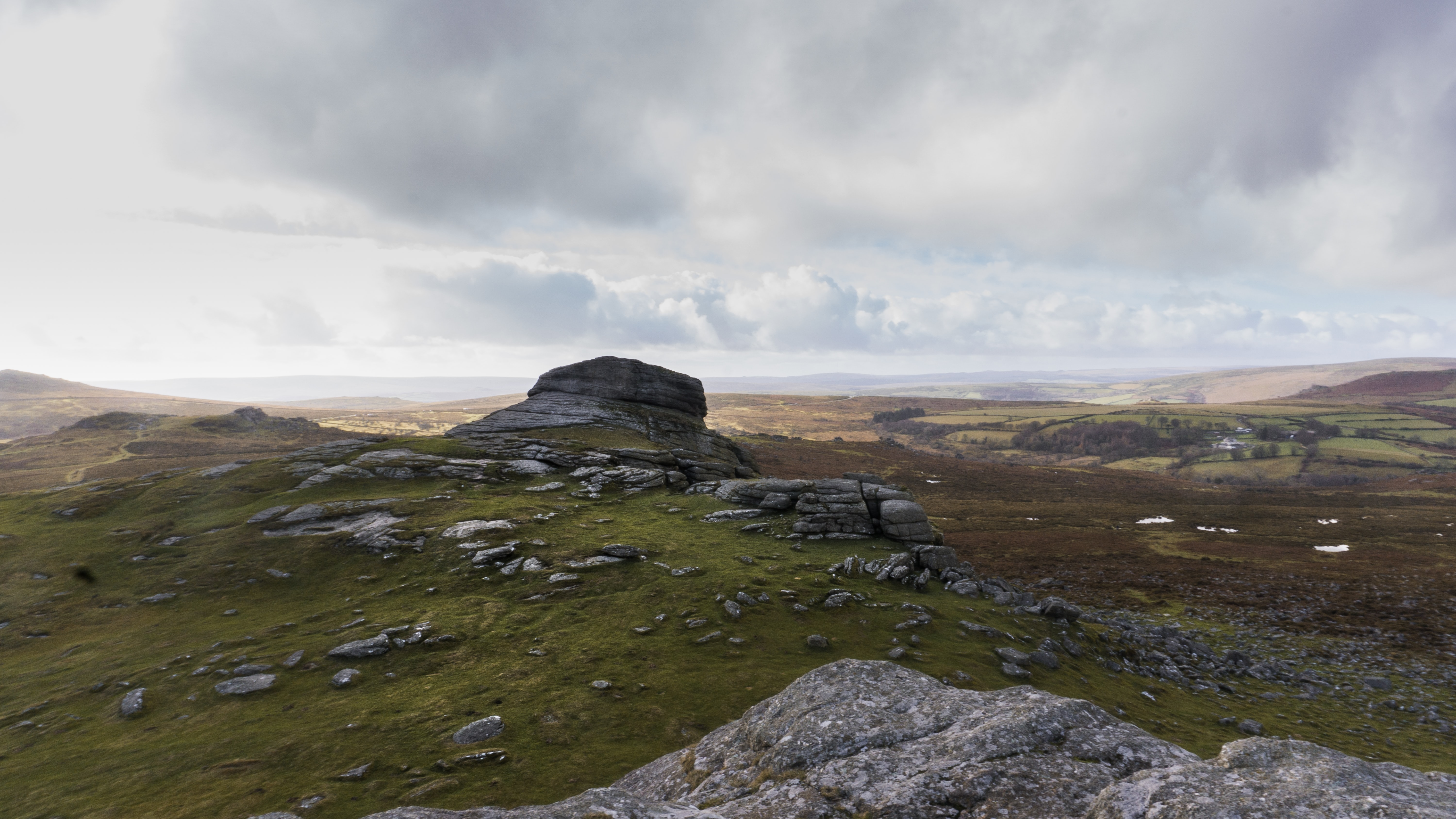
Squint into the distance on a blustery mid-September morning and tiny specks are visible on the ascent to Devon’s best known, though not its highest, craggy outcrop, Haytor. It’s half a mile from the road to the summit, up a long, steep incline to its 457-metre peak. The tiny specks are climbers rigging up to assail it.
Long a favourite of both climbers and hikers, Dartmoor forms the largest area of granite in the UK. Its 160 tors range from the smallest, at just 30m above sea level, to the mighty High Willowhays at 621m high.
On the lower pathways of the moorland below Haytor, the track ranges from rock that nature formed thousands of years ago, to grassy banks and stony paths.
Twelve minutes up, after a breath-sapping sprint to the top, and seated on a stony promontory beside the tor, I’m drinking in 360-degree views of the countryside: to the south east the estuary town of Shaldon, its bridge across the River Teign built with Dartmoor granite and, distantly, to the north the market towns of Tavistock and Okehampton.

This is an ancient landscape. Its barren and craggy terrain once home to the heavy industry that saw rock its from tors sent far afield to build some of Britain’s most iconic monuments like London Bridge, Buckingham Palace, and The British Museum.
Relics from the Stone and Bronze Ages remain here too and on the moor’s eastern side are the remains of three deserted mediaeval settlements: Houndtor, Hutholes and Dinna Clerks which are believed to date back to the 13th Century. This is a place where history lives on, and where children may walk among the ruins and explore the past that still stands before them.
Starting close to the foot of Haytor The Templar Way is a, flat easy walking route that runs from the southern section of the moor to Teignmouth and the sea. Eighteen miles long, it takes the name of 19th Century quarry manager George Templar who designed a tramway to move rock from the heights of the moor to the sea for transport. Unused now for 100 years, it celebrated the 200thanniversary of its construction in 2020 and though nature may have largely reclaimed it with gorse and bracken, its tracks and points can still be seen.
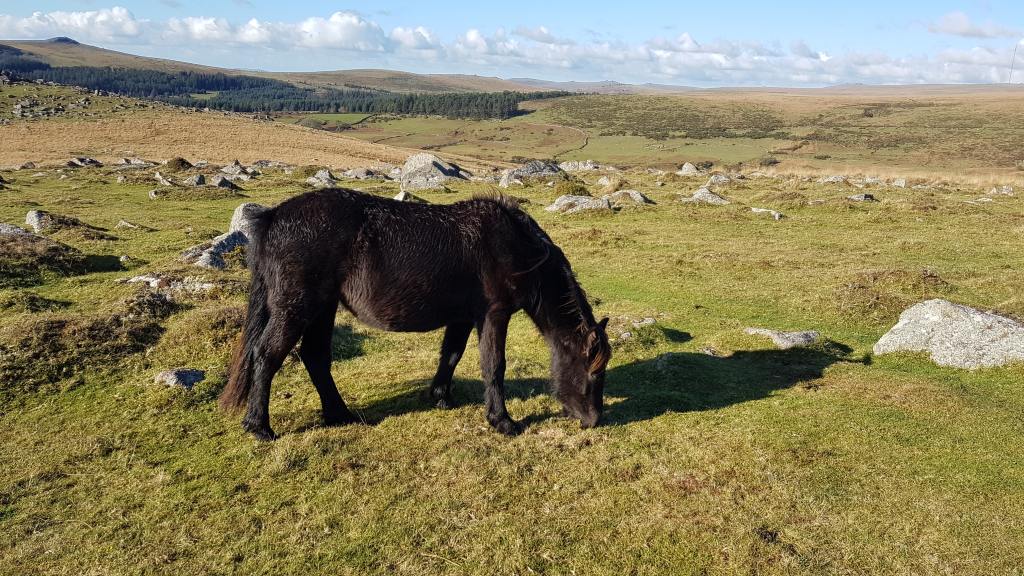
Today over 34,000 people live on the moor. Records from 1950 show that human numbers were then matched by a similar sized population of Dartmoor ponies, but their number has dropped so dramatically it is thought there may be as few as 1,500 left. Though they roam freely the ponies are not wild but owned by farmers with grazing rights on the moor. These beautiful, hardy creatures thrive in the changing moorland climate, their dark thick coats protecting them from both winter’s chill and the summer sun. They share the grazing pasture with cows, breeds that include the South Devon, gentle animals with a light red curly coat who share the hardy characteristics of their companions the Dartmoor pony.
The rugged, uncompromising beauty of this landscape is a contradiction, look in any direction and see how the green rolling hills contrast with the stark barren rock of the tors. Now, through a year when the staycation became cool again, the wild beauty of Dartmoor has provided a place not only to blow away the cobwebs but also to be blown away by dramatic vistas.
 LISA BAITUP
You must be logged in to post a comment.